

Reading time: 4 minutes
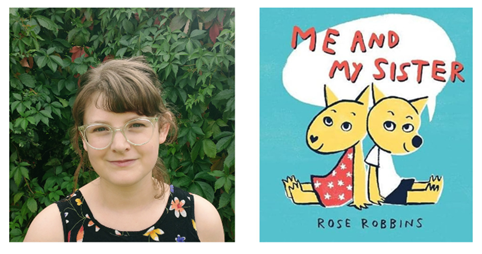
Robbins is an award-winning author, illustrator and sib living in London, UK. I am continually inspired by each of her internationally published picture books, which explore subjects around disability and neurodiversity. As an autistic person herself with an autistic and learning disabled brother, she has a ceaseless passion for inclusion in children’s literature. Her vital book Me and My Sister, which explores the experience of growing up with an autistic sibling, was shortlisted for the Waterstones Children’s book prize in 2019.
Tell me about Me and My Sister and how and why it came about.
Me and My Sister is a picture book that was published in the UK by Scallywag Press in 2019. I wrote and illustrated it, and it’s all to do with the story of a brother and sister, characters who just go about their day. It’s something that I had the idea for based on my own experiences of growing up with a disabled brother who didn’t speak and didn’t behave in the usual way that brothers did.
Growing up, that experience for me was quite a lonely one because I didn’t have another sibling until I was about 10. We lived in quite a remote part of the UK so there weren’t really any other kids around, me and my brother were the only children in the village. I wanted to document that a bit because I realised that there were other people who had had this experience and had very similar feelings growing up that I had. I wanted to make something for those people. I suppose, siblings, if you will.
Why do you think it’s important to have a book from the perspective of the sib?
It’s quite a rare perspective that people have, to be seen in media in any form. It changes your life and I feel it makes a bit of who you are as a person. This specific experience of having a disabled brother or sister and growing up with them and being in that environment, it’s a very specific, different sort of experience. I didn’t really realise this in its full meaning until I started going to the Sibs support groups and realised quite how much in common I had with other siblings. It was like, “Whoa, hang on, this is actually a thing”. And not just this weird specific-to-me thing that nobody would ever understand.
That’s why I feel like it was important, because I never had a book that represented my experience of being a young child and having a sibling who is very different to me (in the way they’re developing and the way they interact with the world) in a more significant way than usual brothers and sisters experience.
I have another brother who is 10 years younger than me and fairly typical. But we didn’t grow up together in the same way that others do, as I was already in a carer role a little bit with my autistic learning disabled brother, so I kind of continued with that. The dynamic of having an equal sibling level playing field is only something I’ve discovered in fairly recent years, now that me and my youngest brother are both adults.
Tell us about your next project.
I’m working on a comic book that is to do with the experience of being autistic, because I was diagnosed myself as being autistic at 27. I’m making a comic that focuses on the experience of being undiagnosed and going through school. This is a bit on hold at the moment, but I’ve also started writing a young adult graphic novel about being an older sibling.
On a personal note, what’s the hardest thing and the best thing about being a sib?
There’s a lot of specific hard things about being a sibling – it’s hard to choose. I think probably the hardest thing is just always feeling like you are not as important or that your needs aren’t going to register as urgently with your caregivers growing up and into adulthood. That carries on and becomes a habit mentally, and it’s something that I have to fight with quite a lot. I tend to think of my needs as less important than other people’s.
I think that there’s lots of specific things that are probably harder and more acute in the moment, but I think that is the most sort of persistent negative thing for me. There’s also the constant worry as well – just worrying about the future, you know? And knowing that there’s no way around it. I have to be there in some capacity and be responsible for my sibling who is very vulnerable. And it’s scary.
The best thing about being a sibling is having a very unique and valuable insight into the meaning of true human relationships and connection. Not everyone gets to have this, because not everybody has a sibling (or someone who’s really close to them) who doesn’t communicate with words. Maybe it’s just purely vibes or body language or even symbols and things like that. I think it’s kind of amazing to see, to have experience of the scope of human interaction in that way from a very young age. It opens up the world.
What do you wish non-siblings understood about sib life? What’s the one thing they could do to support sibs?
Just take us seriously. I think most people do understand that having a brother or sister who has care and support needs is a significant thing. That you will be a significant person in your sibling’s life or your sibling will be a significant person in your own life. Even if you don’t see them or care for them, they’re still a person in your life in some form. I’ve had the experience of people being like “Oh, well, you’re grown up now, so it doesn’t matter anymore.” You’re not a sibling anymore. It can’t be difficult because you’re not children anymore. So it must now be fine. I’d like people to have some understanding of the responsibility that siblings feel and that they can be just as much of an essential part of their siblings’ support.
Whenever my brother’s carers see me, they say: “Oh, it’s been ages, it’s been ages!” It makes me feel like they think I’m not doing enough or I’m not present enough. I know they don’t mean it like that, but I do worry about it.
What else would you like other sibs to know?
Sibs [the UK charity for brothers and sisters] is great. I wouldn’t have had the idea for doing the book or felt confident to do the book if it hadn’t been for having that network and the support of other people who felt the same way. That kind of connection with others and having your feelings validated is very powerful.
Visit roserobbins.co.uk
Follow Rose Robbins on Instagram